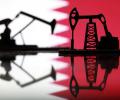
Qatar, India's largest supplier of imported natural gas, has declared force majeure on deliveries following a halt in production in the wake of an Iranian drone strike -- a disruption that has led to a cut in supplies to Indian industry by up to 40 per cent, sources said.

The UN Security Council, with India's support, has adopted a resolution condemning Iran's attacks on Gulf Cooperation Council countries and Jordan, demanding an immediate cessation of hostilities and denouncing threats to the Strait of Hormuz.

Secretary of State Marco Rubio urged its citizens to immediately depart from several Middle Eastern countries, citing "serious safety risks."

The delegations from the US and Iran head to Islamabad on Friday, carrying a ceasefire that is already fraying, a Strait that is technically open and practically closed, and a negotiating agenda that would challenge even parties actually negotiating in good faith, which these groups are not. Prem Panicker continues his must read blog on the Iran War.

What we are watching is something different: A fog manufactured and maintained by the people who started the war, so that the question of why it was started never has to be answered, observes Prem Panicker in his must read blog on the war in the Middle East.

Citizens and residents across the Gulf region are preparing for Eid amidst regional conflict, impacting festivities and daily life.
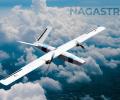
The foremost lesson for India today is to beef up its air defence to cater for multiple drone attacks. As seen in Operation Sindoor, we have come a long way, but there's room for getting better. We must develop a robust and almost impregnable air cover over ourselves, asserts IAF veteran Air Commodore Nitin Sathe (retd).

Nobody takes Pakistan seriously and therefore Pakistan's sudden mediating with almost immediate results of a ceasefire seems more contrived than real, points out Vice Admiral Biswajit Dasgupta (retd).

Iran is fighting a different war: Older, slower, and in some ways more dangerous. Iran doesn't need to shoot down an F/A-18. It only needs to make the Strait of Hormuz feel dangerous long enough for insurance markets, shipping companies, and oil futures traders to do the rest. Prem Panicker continues his must-read daily blog on the war in the Middle East.

It may now be time to question the price India is paying for Israel's disregard of the serious undermining of India's energy security, asserts former foreign secretary Shyam Saran.

Iran's Islamic Revolutionary Guard Corps (IRGC) claims control of the Strait of Hormuz and reports striking a US destroyer, escalating tensions in the Middle East following retaliatory strikes between Iran, the US, and Israel.

Dozens of Indian-flagged ships and over a thousand seafarers are stranded in the Persian Gulf, Gulf of Oman, and surrounding areas due to the closure of the Strait of Hormuz amidst ongoing military actions involving the US, Israel, and Iran.

Far from it; the country's resistance to the US, its nuclear ambitions, and its pursuit of influence and proxies across the Middle East are driven by a constant search for independence and security. Thus, Iran will never capitulate. Trump will learn this home truth ultimately, and it is going to be a humbling personal experience that may even destroy his presidency, predicts Ambassador M K Bhadrakumar.

India's three major listed shipyards - Mazagon Dock Shipbuilders Limited (MDL), Garden Reach Shipbuilders & Engineers Limited (GRSEL), and Cochin Shipyard Limited (CSL) - are poised for substantial growth, driven by a robust order pipeline from the Indian Navy and diversification into commercial and export markets.

The Lebanese army has begun evacuating some of its forward positions along the border with Israel and redeploying troops to other posts, Lebanon's state-run National News Agency (NNA) reported on Tuesday, amid intensified Israeli military activity in the area.

Prime Minister Narendra Modi spoke with Iranian President Masoud Pezeshkian to discuss the escalating tensions in West Asia, emphasising the safety of Indian nationals and the need for regional stability through dialogue and diplomacy.

United States President Donald Trump on Friday declared that there would be 'no deal with Iran except unconditional surrender' amid the escalating West Asia conflict, asserting that Tehran must capitulate before any diplomatic negotiations can proceed.

The LPG squeeze on India's restaurant sector is the quotidian face of a deeper crisis.

'We are getting used to the constant alerts to take shelter, listening to sonic booms from jets flying above us, hearing news of neighbouring ports being targeted, and being the only ship in the terminal.'

He also criticised the possible succession of the son of the late supreme leader of the Islamic Republic, Mojtaba Khamenei, who is widely viewed as a leading contender for the position.

Chinese foreign ministry spokesperson Mao Ning said that the country believes that dialogue and negotiation are the only viable solutions to resolving disputes and that the continued escalation of the conflict serves no one's interests.
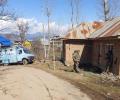
Security agencies are concerned about the increasing use of drones by terror groups in Jammu and Kashmir for surveillance and logistics, replacing human networks.

'The next two to three weeks will not be decided in Washington.' 'They will be decided in Tehran, in whatever calculation Iran makes about the costs of continued resistance against the costs of appearing to have yielded.'

Qatar has halted liquefied natural gas (LNG) production after its facilities came under attack amid the ongoing West Asia conflict, disrupting supplies to India and squeezing feedstock availability for key domestic sectors.

'Despite the large number of missiles and drones we have already launched, we still possess reserves and missile cities whose doors have not yet been opened,' says Iran's Consul-General Saeid Reza Mosayeb Motlagh.

Amidst escalating tensions in West Asia, India voices strong concerns over the safety of its nationals and the potential disruption to energy supplies, urging dialogue and diplomacy for a swift resolution.
Tensions escalated dramatically on March 5, 2026, as the United States and Israel launched coordinated strikes on Iran, triggering retaliatory explosions across Tehran, Sanandaj, and beyond.

'Moments like this remind us how fragile life really is.'
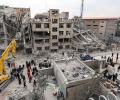
The call came before Iran's new supreme leader Mojtaba Khamenei vowed vengeance and urged citizens to continue their fight against the attacks by US and Israel.
Over 4,000 AI-enabled cameras and 15,000 security personnel are deployed for the India AI Impact Summit 2026 at Bharat Mandapam, ensuring high-level security and surveillance.

A French soldier was killed while several others were injured in an attack in the Erbil region of Iraq, French President Emmanuel Macron confirmed. Macron, in a post on X, confirmed that Chief Warrant Officer Arnaud Frion of the 7th Battalion of Chasseurs Alpins lost his life in the attack.
Odisha Police formed a Special Investigation Team (SIT) to investigate an illegal hashish oil trade operating from an island in Koraput district, following a major drug seizure and multiple arrests.
The Border Security Force (BSF) is raising a maiden 'drone squadron' for deployment along the India-Pakistan border. The squadron will comprise reconnaissance, surveillance and attack drones and specially-trained personnel.

Taking Kharg would give the US control over virtually all of Iran's oil exports and thus provide significant leverage, notes Prem Panicker in his must read daily blog on the Gulf War. It would also put American troops within range of Iran's remaining missiles, drones, and artillery on a piece of real estate that is just eight square miles in size, and just 15 miles from the Iranian mainland.

Dubai's core promise -- that it is an oasis untouched by regional storms -- has been tested in full public view. The coming months will show whether investors view the attacks as a short-lived disruption or a deeper signal of lasting risk, points out Asif Ullah Khan.

The US-Israeli military campaign, dubbed "Operation Epic Fury" by Washington, has entered its third day, with US President Donald Trump stating that operations would continue "until all of our objectives are achieved."

The question is no longer whether the war will expand. It has. The next few days will tell us whether the war stabilises around Hormuz or whether the Strait itself becomes the trigger for a far larger rupture. What to watch for over the next 48 hours is simple: Any move by the US toward direct naval control of the Strait; any credible Iranian attempt to disrupt or mine shipping lanes and, critically, whether energy infrastructure in the Gulf continues to be targeted.If those lines are crossed in tandem, the war will no longer be containable within the region.

The United States, which entered this war in expectation of a short, sharp win along the Venezuela model, is now preparing for deeper involvement in a conflict it does not fully control, without the allies it typically relies on, against an adversary that is not behaving as expected, in a global environment that is already absorbing economic shock. Prem Panicker continues his must read daily blog on the Gulf War.

The Indian Army's Air Defence units successfully shot down multiple Kamikaze drones launched by Pakistan after they crossed the International Border in Punjab's Amritsar early Saturday morning. The drones, identified as Byker YIHA III models, were carrying high-explosive payloads and were headed towards densely populated civilian areas. The incident highlights the efficiency of India's multi-layered air-defence system.

'The entire US ecosystem built over decades at the bases in the Gulf region, especially the UAE, costing trillions of dollars have been decimated, dealing a mortal blow to the US Central Command's war capability,' points out Ambassador M K Bhadrakumar.
